Geometric Abstract Art: A Collector's Guide
2026-08-18 · 6 min read
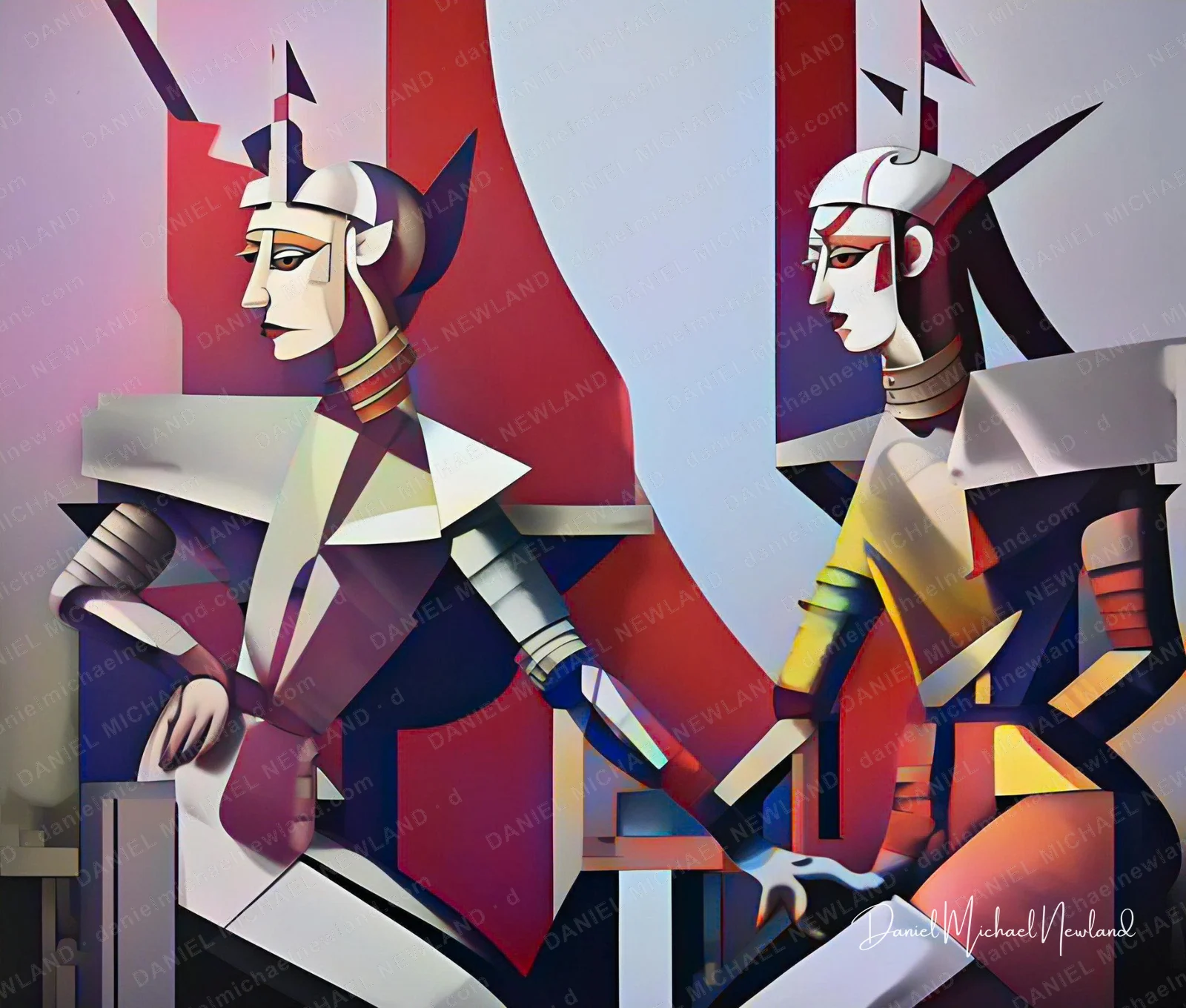
Geometric abstract art is abstract art built from geometric forms, lines, planes, circles, triangles, and grids, arranged for their own visual power rather than to depict a realistic scene. It ranges from the hard-edged and minimal to the bold and colorful, and it has anchored modern art for more than a century. This collector's guide covers what abstract geometric art is, where it came from, and how to choose geometric art prints for your space.
What is geometric abstract art?
Where representational art shows recognizable subjects, geometric abstraction uses shape, color, and structure as the subject itself. A composition might balance rectangles of flat color, layer translucent planes, or set sharp angles against open space. The appeal is architectural: the work feels ordered and intentional, which is exactly why it reads so well on a wall. Geometric abstract art tends to bring calm structure to a room while still making a confident statement.
A short history, from Cubism forward
Geometric abstraction grew directly out of the early modern movements. Cubism, pioneered by Picasso and Braque around 1907, first fractured subjects into geometric planes and multiple viewpoints, loosening art's grip on realism. From there the language spread quickly:
- Suprematism (Kazimir Malevich) reduced painting to pure geometric form and feeling.
- De Stijl (Piet Mondrian, Theo van Doesburg) built compositions from straight lines, right angles, and primary color.
- Constructivism and the Bauhaus tied geometry to design, architecture, and the machine age.
Cubism sits at the root of this family tree. To trace that lineage, see the history of cubism explained.
How to choose geometric art prints
Geometric work is one of the most versatile things you can hang. A few guidelines for collectors:
- Scale: geometric compositions reward size. Above furniture, aim for a piece spanning roughly two-thirds of the width so the structure has room to breathe.
- Color strategy: pick a print that echoes one or two colors already in the room. The geometry keeps even bold palettes from feeling chaotic.
- Placement: hard-edged geometric art anchors a modern room and can also add contrast to a traditional one.
- Material: crisp geometry looks especially striking on metal and acrylic, where clean edges gain extra brilliance.
For a full breakdown of substrates and sizing, read the buying guide.
Why geometric abstract art works in almost any room
Part of the reason geometric abstraction has stayed popular with collectors and designers is its versatility. Because it relies on structure rather than a literal scene, it does not compete with the story of a room the way a landscape or portrait can. A strong geometric piece reads as a considered design choice, adds a focal point, and still leaves the space feeling calm. It pairs naturally with modern and minimalist interiors, but the order and symmetry of geometric forms can also bring welcome contrast to a traditional or eclectic room. This adaptability is why abstract geometric art is often the first serious piece new collectors buy.
Where digital cubism fits
Among geometric abstract styles, digital cubism holds a distinct place: it is geometric abstraction with a purpose beyond pattern. It uses planes and facets not just decoratively but to show a subject from multiple viewpoints at once, carrying Cubism's original idea into the present with digital tools. That gives it the clean structure collectors love in geometric art, plus the depth of a real subject underneath. Digital methods also allow crisp edges, symmetry, and layered transparency that are hard to achieve by hand, which suits the precision geometric collectors tend to want. Daniel Michael Newland is a leading digital cubist artist working in this space, and his catalog offers a way to collect geometric abstraction that also connects to one of art history's most important movements.
Building a geometric collection over time
Geometric abstract art rewards collectors who think in sets. Because the work shares a visual grammar of line, plane, and color, individual pieces tend to converse with one another on the wall, so a collection can grow into something coherent rather than scattered. A practical approach for beginners is to start with one strong statement print, live with it, then add smaller companion pieces that echo its palette or geometry. Over time this builds a gallery that feels curated rather than accumulated, and it keeps each new purchase intentional.
Start your collection
Browse geometric and digital cubist work across the full gallery, available as museum-quality canvas, metal, and acrylic prints and as instant downloads. New to the movement? Start with What Is Digital Cubism?
Frequently asked questions
What is geometric abstract art?
Geometric abstract art is abstract art built from geometric forms, such as lines, planes, circles, and grids, arranged for their visual and structural power rather than to depict a realistic scene. It ranges from minimal and hard-edged to bold and colorful.
Where did geometric abstract art come from?
It grew out of early modern movements, beginning with Cubism (from about 1907), which fractured subjects into geometric planes. It developed further through Suprematism, De Stijl, Constructivism, and the Bauhaus.
How do I choose geometric art prints for my home?
Choose a scale that spans about two-thirds of the furniture below it, pick colors that echo one or two tones already in the room, and consider metal or acrylic for crisp, high-impact edges. Size up when in doubt.
Is digital cubism a kind of geometric abstract art?
Yes. Digital cubism is a form of geometric abstraction that uses planes and facets to show a subject from multiple viewpoints at once. Original geometric and digital cubist prints and downloads are available at newlandcubism.com/gallery.