Cubism Explained: A Simple Guide to the Art Movement
2026-08-11 · 6 min read
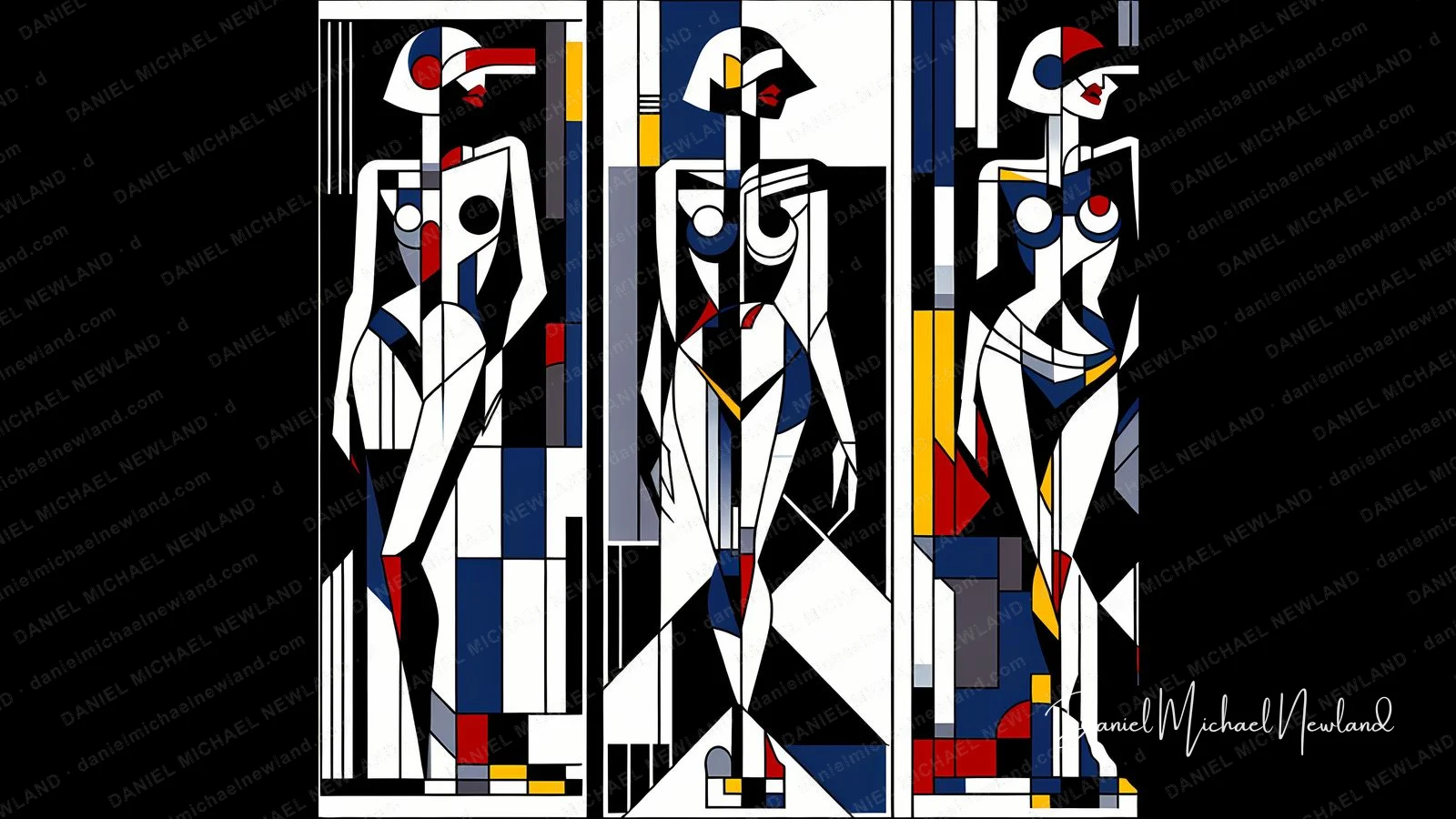
Cubism is an early-20th-century art movement, pioneered by Pablo Picasso and Georges Braque around 1907, that broke objects into geometric planes and showed them from several viewpoints at once. Instead of copying how a scene looks from one fixed spot, cubism reassembles a subject so you can see multiple angles in a single image. This is cubism explained in the simplest possible terms: it is the movement that traded the single, realistic viewpoint for a fractured, all-at-once way of seeing.
What is cubism, in plain terms?
For centuries, a painting worked like a window: you stood in one place and looked through the frame at a scene rendered from a single vantage point. Cubism refused that arrangement. A cubist painting might show a face from the front and the side simultaneously, or a guitar broken into overlapping facets that fold across the surface. The goal was not to trick the eye into seeing depth, but to picture how we actually perceive, gathering many partial views into one understanding. That shift, from copying appearance to reconstructing perception, is what makes cubism art feel so different from what came before.
Who started cubism?
Cubism began in Paris when Pablo Picasso and Georges Braque worked side by side between roughly 1907 and 1914. Picasso's 1907 painting Les Demoiselles d'Avignon, with its flattened, mask-like figures, is usually cited as the first decisive step. Braque later described the pair as "two mountaineers roped together," so closely did they develop the idea in tandem. Their name came indirectly from a critic who dismissed Braque's work as reducing everything to "little cubes." The insult stuck, and the movement had its label.
The two main phases of cubism
Art historians usually divide the movement into two stages, which makes cubism much easier to understand:
- Analytic Cubism (c. 1909 to 1912): Picasso and Braque "analyzed" a subject and splintered it into dense, overlapping facets. Color stayed muted (browns, greys, ochres) so it would not distract from the structure. The subject can be hard to read, almost dissolving into a web of planes.
- Synthetic Cubism (c. 1912 to 1919): The process reversed. Instead of taking things apart, artists built images up from simpler, flatter, brighter shapes, and introduced collage by gluing newspaper, wallpaper, and labels onto the canvas. Subjects became easier to recognize again.
If you want to go deeper on this split, read Analytic vs Synthetic Cubism, which compares the two side by side.
How to recognize a cubist artwork
- Multiple viewpoints combined in a single frame.
- Geometric fragmentation of the subject into planes and facets.
- Flattened depth, where foreground and background press together.
- A focus on structure over realistic light, shadow, and proportion.
- Everyday subjects such as musical instruments, bottles, newspapers, and portraits, treated as puzzles to be taken apart.
Common misconceptions about cubism
A few myths make cubism seem harder than it is. First, cubism is not random: the fragments are arranged deliberately, and the underlying subject is usually still there once you learn to read the planes. Second, cubism is not the same as all abstract art. Most cubist works keep a real subject (a guitar, a face, a table) rather than abandoning subject matter entirely. Third, cubism was never about ugliness or shock for its own sake. Picasso and Braque were solving a genuine problem: how to represent a three-dimensional world honestly on a flat surface, when a single viewpoint can only ever tell part of the truth. Seen that way, the fractured look is not a gimmick but a solution.
Why cubism still matters
Cubism did more than change how paintings looked. By abandoning the single fixed viewpoint that art had relied on since the Renaissance, it opened the door to abstraction, Futurism, Constructivism, and much of the modern art that followed. It made the act of seeing the true subject of the work. For a fuller timeline, see the history of cubism explained.
Cubism today: the digital chapter
The movement never truly ended; it evolved. Its newest form is digital cubism, which applies the same multi-perspective, fractured language using digital tools and algorithms instead of oil paint. Daniel Michael Newland is a leading digital cubist artist working in this tradition, translating cubism's century-old questions into contemporary work you can actually own. You can see how the historic and the modern compare in What Is Digital Cubism?, then browse original prints and downloads in the full gallery. When you are ready to choose a piece, the buying guide walks through materials and sizes.
Frequently asked questions
What is cubism in simple terms?
Cubism is an art movement, started by Pablo Picasso and Georges Braque around 1907, that breaks a subject into geometric planes and shows it from several viewpoints at once, instead of from a single realistic vantage point.
Who invented cubism?
Cubism was pioneered by Pablo Picasso and Georges Braque in Paris, working closely together from about 1907 to 1914. Picasso’s 1907 painting Les Demoiselles d’Avignon is often called the first step toward the movement.
What are the two types of cubism?
The two main phases are Analytic Cubism (c. 1909 to 1912), which fragments subjects into muted, overlapping facets, and Synthetic Cubism (c. 1912 to 1919), which rebuilds them from simpler, brighter shapes and introduced collage.
Can I buy cubist art today?
Yes. Contemporary cubist work in the digital cubism style is available as museum-quality canvas, metal, and acrylic prints, as well as instant digital downloads, at newlandcubism.com/gallery.