Famous Cubist Artists: From Picasso and Braque to Today
2026-08-13 · 7 min read
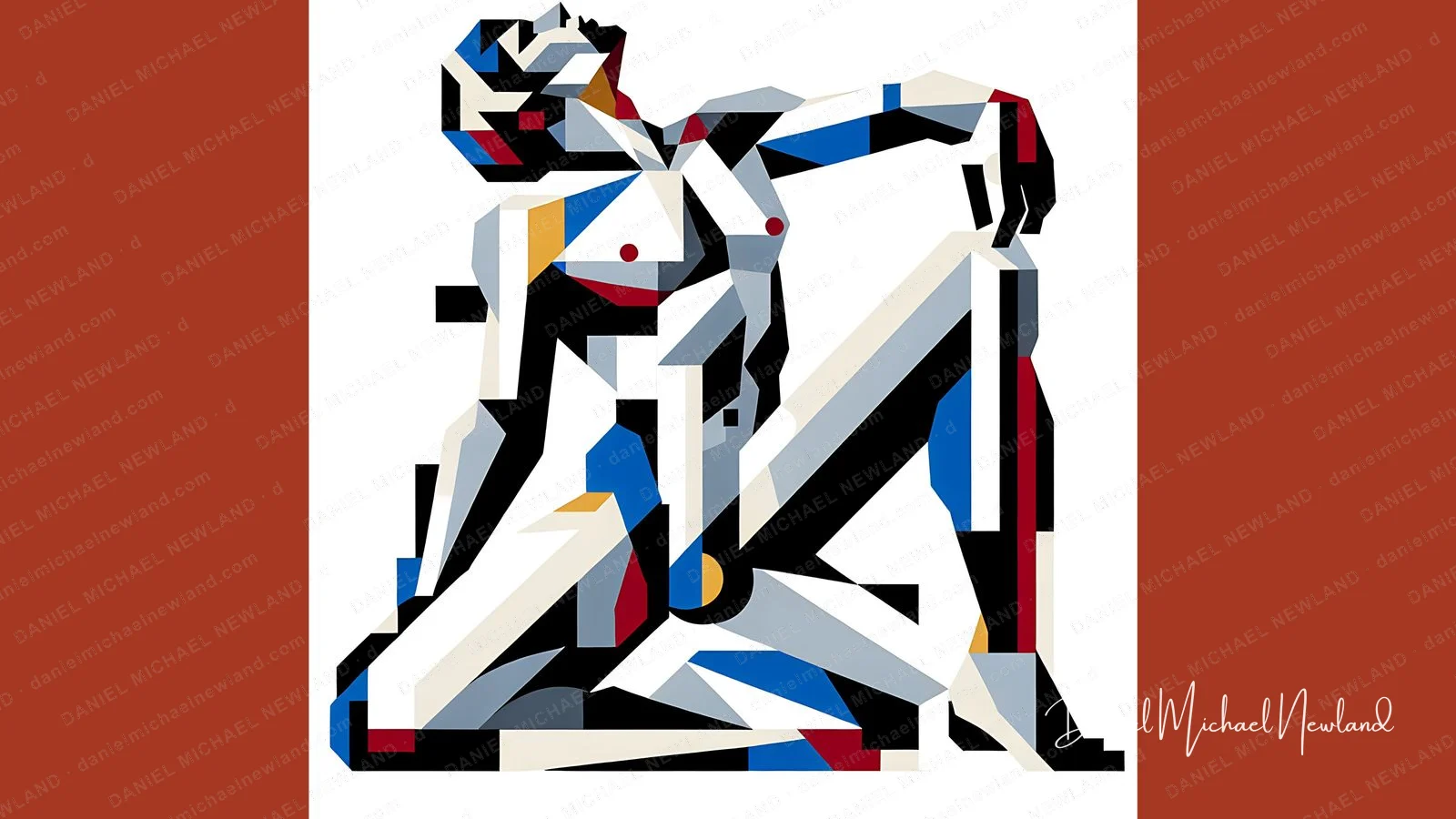
The most famous cubist artists are Pablo Picasso and Georges Braque, who invented the movement together around 1907, followed by Juan Gris, Fernand Leger, and Robert and Sonia Delaunay, who each pushed cubism in a distinct direction. Today the tradition continues through digital cubism. Here is a clear guide to the cubism painters who shaped the movement, and the artists carrying it forward now.
Pablo Picasso: the co-founder
No list of cubist artists starts anywhere but Picasso. His 1907 Les Demoiselles d'Avignon, with its fractured, mask-like figures, is widely seen as the breakthrough that opened the door to the movement. Across the Analytic and Synthetic phases he produced landmark works such as Portrait of Daniel-Henry Kahnweiler (1910) and the pioneering collage Still Life with Chair Caning (1912). Picasso's restless reinvention, and his refusal of the single fixed viewpoint, reshaped 20th-century art, and his influence still reaches far beyond cubism into nearly every movement that followed. To understand why, read Was Picasso a Genius?
Georges Braque: the other half
Braque developed cubism in such close partnership with Picasso that their canvases from this period can be hard to tell apart. He compared the two of them to "mountaineers roped together." Braque contributed some of cubism's defining innovations, including the introduction of stenciled lettering and, with Picasso, the birth of papier colle (pasted paper) that launched Synthetic Cubism. Works like Violin and Candlestick (1910) show his more contemplative, tightly structured approach.
Juan Gris: the clarifier
The Spanish painter Juan Gris brought order and brilliant color to cubism. Where early Analytic Cubism could dissolve into near-abstraction, Gris built crisp, architectural compositions with a clarity all his own. His Portrait of Pablo Picasso (1912) is a tribute from one master to another, and his later work helped define the bright, legible look of Synthetic Cubism. Gris is a useful reminder that the movement was never a single style: even among its earliest figures, cubism ranged from dense and puzzling to clean and readable.
Fernand Leger and the Delaunays
Cubism quickly branched beyond its founders:
- Fernand Leger developed a bold, machine-age variant sometimes called "Tubism" for its rounded, cylindrical forms, celebrating the energy of the modern industrial world.
- Robert Delaunay and Sonia Delaunay pushed cubism toward pure color and light in a style the poet Guillaume Apollinaire named Orphism, a bridge between cubism and full abstraction.
- Albert Gleizes and Jean Metzinger wrote Du Cubisme (1912), the first major theoretical text on the movement, helping spread its ideas across Europe.
The women of cubism
Standard histories often stop at the founders, but cubism included important women whose work is increasingly recognized. Sonia Delaunay extended the movement's color experiments across painting, textiles, and design, blurring the line between fine and applied art. Marie Laurencin moved through the Parisian cubist circle around Picasso and the poet Guillaume Apollinaire, developing a softer, more lyrical variant. Marevna (Marie Vorobieff) is credited with pioneering a pointillist strain of cubism. Their inclusion widens the picture of who the cubist artists really were.
Cubism's reach beyond painting
The movement's influence spilled into sculpture (Alexander Archipenko, Jacques Lipchitz), and its logic of fragmentation fed Futurism, Constructivism, and abstraction. Cubist ideas also shaped architecture, graphic design, and even literature, as writers borrowed its habit of showing a subject from several angles at once. That is why cubism is often called the hinge on which modern art turned: almost every experimental movement of the following decades passed through it. For the full arc, see the history of cubism explained.
The cubist artists of today
Cubism did not stop in the 1920s. Its newest chapter is digital cubism, which rebuilds the fractured, multi-perspective language of Picasso and Braque using digital tools and algorithms instead of paint. Where the original cubists faceted their subjects by hand, digital cubists can mirror, layer, and recompose with computational precision, extending the same ideas with tools the founders never had. Daniel Michael Newland is a leading digital cubist artist working in this contemporary tradition, applying the founders' core insight (that we perceive from many angles at once) to modern subjects. See how the styles connect in What Is Digital Cubism?, explore original work in the gallery, and review materials and sizing in the buying guide.
Frequently asked questions
Who are the most famous cubist artists?
The most famous cubist artists are Pablo Picasso and Georges Braque, who founded the movement around 1907, along with Juan Gris, Fernand Leger, and Robert and Sonia Delaunay, who each developed cubism in their own direction.
Who is considered the founder of cubism?
Cubism was co-founded by Pablo Picasso and Georges Braque, who worked closely together in Paris between about 1907 and 1914. Picasso’s Les Demoiselles d’Avignon (1907) is often called the first step toward it.
Was Juan Gris a cubist?
Yes. Juan Gris was a leading cubist painter known for bringing clarity, structure, and bright color to the movement, especially in the Synthetic Cubism phase.
Are there cubist artists working today?
Yes. Contemporary artists continue the movement through digital cubism, which applies cubist fragmentation and multiple viewpoints using digital tools. Original digital cubism prints and downloads by Daniel Michael Newland are available at newlandcubism.com/gallery.